Products and configurations to compare
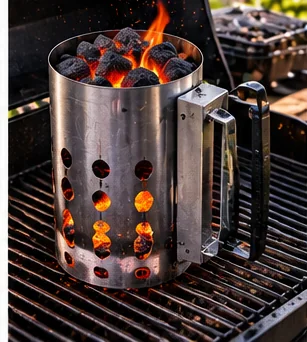
Weber Rapidfire Chimney
Large, simple and proven.
Best when: you grill charcoal anywhere
Watch for: hot metal needs gloves and safe surface
Electric charcoal starter wand
No starter cubes or paper.
Best when: you have an outdoor outlet
Watch for: cord and hot-element handling
Charcoal lighter cubes
Cleaner than newspaper in wind.
Best when: you want predictable ignition
Watch for: consumable
Chimneys create an even batch
Coals ignite bottom-to-top before pouring.
Electric starters light a zone
The fire then spreads through the pile.
Capacity matters for two-zone cooking
You can light exactly the amount you need.
Wind changes startup
Protect ignition without moving charcoal into enclosed areas.
Never burn charcoal indoors
Carbon monoxide makes charcoal an outdoor-only fuel.
Fuel gear is really moisture and workflow gear
Pellets and charcoal become inconsistent when stored badly. Damp pellets can swell and crumble; wet charcoal is harder to light and less predictable. Store fuel dry, off the ground and away from ignition sources. A rigid bin, bucket or chimney is valuable because it makes preparation repeatable, not because the patio needs another branded object.
Gas adds a different problem: knowing what remains in a cylinder. Pressure-style dials are not linear fuel gauges because propane vapor pressure remains substantial while liquid remains. Weight or ultrasonic liquid-level sensing is more directly tied to remaining fuel.
Build around the fuel you actually use
A charcoal owner benefits from a chimney and baskets. A pellet owner benefits from airtight bins and a scoop. A gas owner benefits from a spare-cylinder plan and reliable level checking. Buying fuel accessories for three grill types you rarely use is just clutter.
Before checkout
- Accessory physically fits the exact grill or cooking surface
- Heat rating exceeds the intended grill or sear temperature
- Thermometer type matches instant-read or leave-in use
- Fuel and storage gear protects against moisture
- Food-contact materials are appropriate and cleanable
- Grease and airflow paths remain unobstructed
- Handles and controls remain usable with grill gloves
- Outdoor storage can tolerate weather or comes inside
- Replacement probes, heads or parts remain available
- The purchase solves a repeated problem or adds a real cooking method
The accessory should earn its storage space
Outdoor cooking equipment multiplies quickly because each item looks inexpensive by itself. Picture where the product lives after the cook, when it is greasy, cold and wet. A rotisserie kit has a spit, motor and brackets. A cast-iron plate may weigh more than ten pounds. A thermometer is tiny and used constantly. Frequency of use should influence the budget as strongly as feature count.
Price the ownership layer too. Wireless probes need charging or replacement, steam-cleaning heads wear, pellet bins multiply by flavor and model-specific covers eventually weather. A good purchase still makes economic sense three seasons later.
First-cook test
Use new gear on a simple cook before a party. Verify thermometer connectivity, dry-fit rotisserie clearance, make sure grease can drain around a griddle, learn the pizza surface at your grill's actual temperature and confirm cleaning tools match the grate spacing. A ten-minute test can prevent a ruined meal or damaged accessory.
Afterward, decide whether the item changed capability, consistency or cleanup enough to keep. If it did not, use the return window rather than permanently adding it to the patio pile.
Frequently asked questions
How much does Rapidfire hold?
Weber lists about 5.7 lb of standard briquettes.
Need lighter fluid?
No.
Is electric faster?
Some are fast; it depends on design and charcoal.
Where can I set a hot chimney?
On a safe noncombustible surface.
Current product/source checks
Affiliate disclosure: GrillGuide.co may earn from qualifying purchases through Amazon Associates and eBay Partner Network at no extra cost to you. Amazon links use scouttheory-20; eBay links use campaign 5339137014.